
Navigating a Minefield
In 2023, Myanmar recorded the worst annual landmine casualties in the world for the first time, according to the most recent Landmine Monitor report. After decades of contamination, the conflict since the 2021 coup has seen a sharp increase in the deadly and indiscriminate use of anti-personnel mines, with children and other civilians suffering the consequences. As the threat increases, however, Myanmar remains severely under-resourced in terms of risk education and support for survivors compared to other conflict areas.
Over the coming year, Insight Myanmar will be producing an in-depth series titled “Navigating a Minefield”, exploring the situation on the ground, impacts on survivors and communities, and humanitarian mine action that is changing people’s lives. The series will include testimonials from survivors who are overcoming trauma, with the support of their communities and a dedicated network of humanitarian organizations.
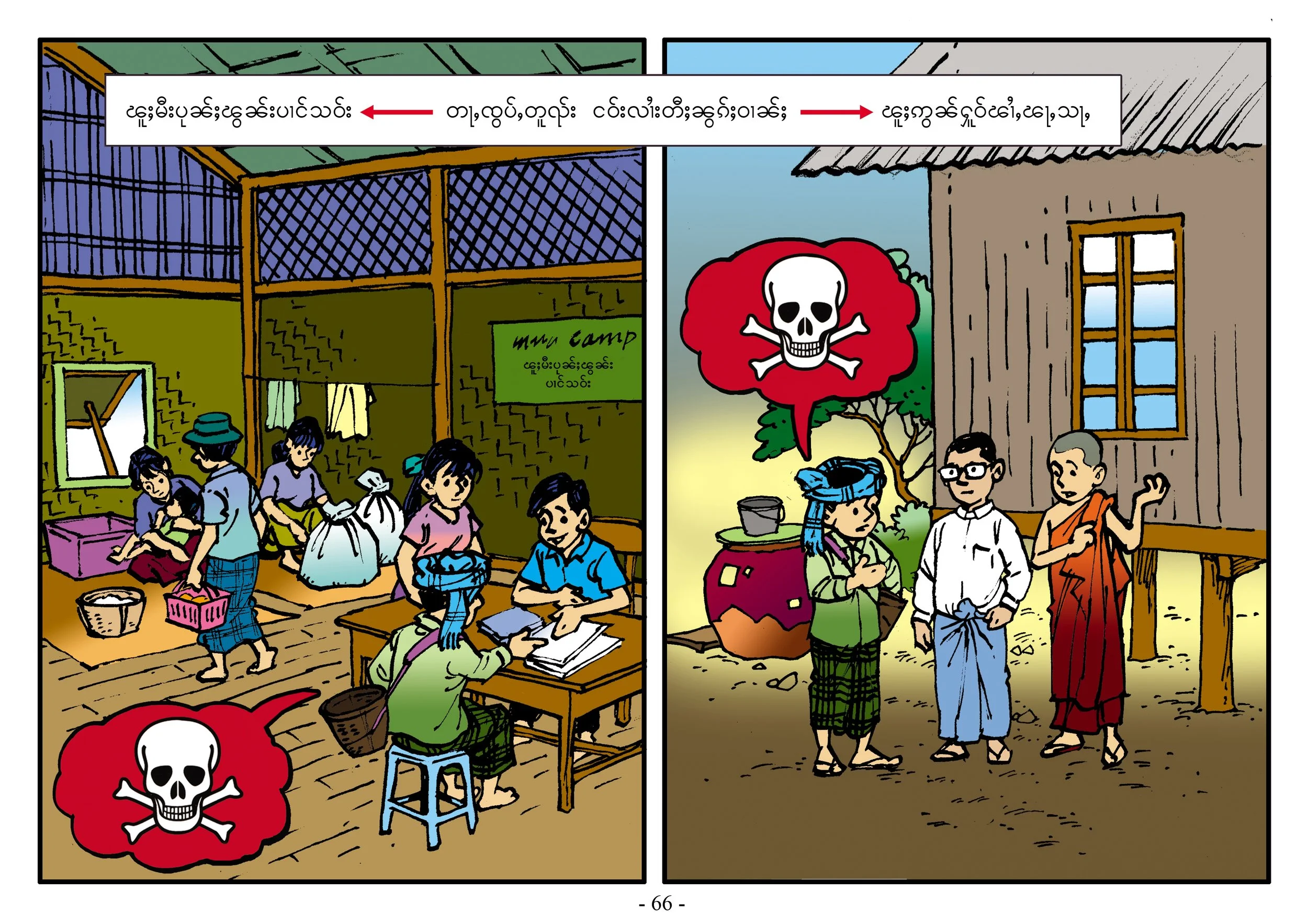
More information about the series and multilingual risk education materials are available on the Insight Myanmar website under the “Navigating a Minefield” section. We are joining a network of media outlets publishing in Burmese, ethnic languages, and English, in Myanmar and the diaspora, supporting increased awareness and education on the risks of landmines and explosive remnants of war among at-risk populations. We encourage listeners to share these resources with their friends and colleagues to mitigate the risk and to advocate for the end of this awful threat.
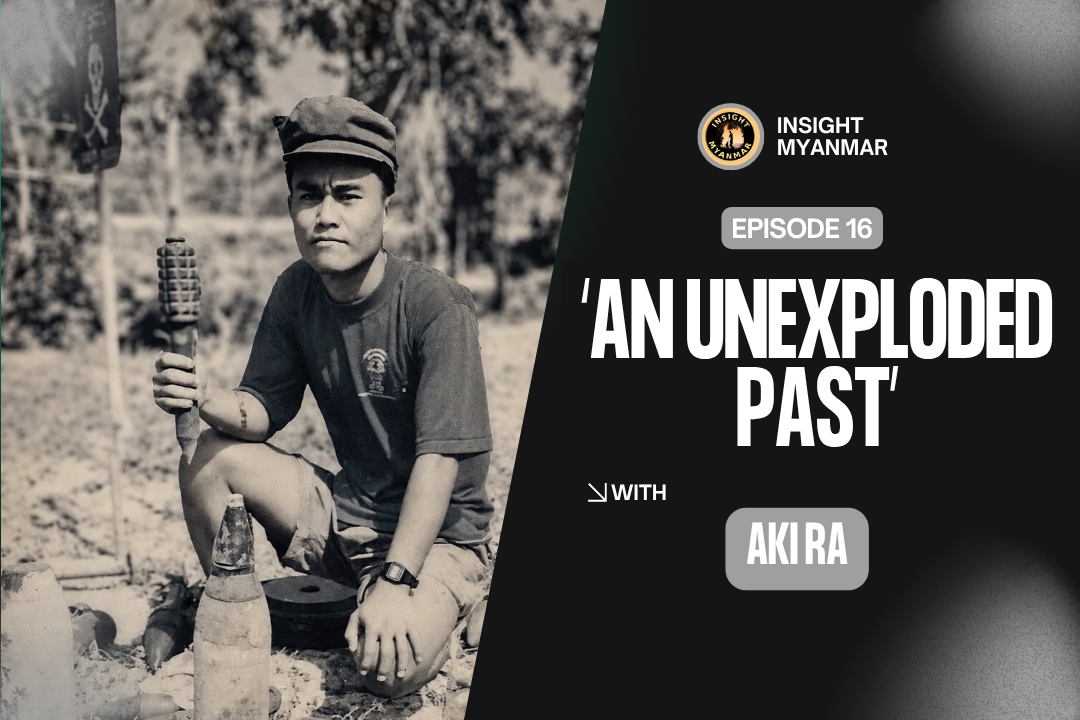
Episodes will be released every month featuring interviews with experts and community leaders making a difference on humanitarian mine action, examining this complex, sensitive, and terrible issue from diverse perspectives and subject domains. We see these discussions on history, policy, and coordinated action as complementary to the risk education and survivor support that is literally saving lives.




Testimonies from the Field

Parent’s Love
“I felt sad, depressed and just wanted to die. But I tried to stay strong for my family.”
My name is Daw Si Si, and I live in Chaung-U Township with my husband and 18-year-old daughter. We have a small betel leaf farm that we rely on for our livelihood. On those days that we do not pick betel leaves, we do odd jobs to earn our family's sustenance. Previously, my daughter hoped to learn sewing so that she might have a stable career in the future. My husband relied mainly on the betel farm for our family income.
In June 2024, our village was raided by junta forces. Our family tried to flee to safety together with other villagers. Unfortunately, we ran directly into the junta force and were taken as hostages, to be used as human shields for them. They told us to walk in front of them and we had to follow their instructions. At one point, I heard a loud noise and before I knew it, I felt pain in my thigh. Some of the villagers were injured also.
-
I was hospitalized after this incident. Medical expenses were a huge burden for us, and apart from that I felt sad, depressed and just wanted to die. But I tried to stay strong for my family. Now the wound is healing better than before, and I can walk slowly.
However, I felt bad for my daughter as she had to pause her sewing class to take care of me and, since my husband was recently treated for a medical condition, my daughter had to work at the betel farm. My husband also wanted her to follow her dreams.
Now, thanks to contacts provided by the village leader, I received 500,000 kyat I could use for medical expenses, transportation and food. I feel lucky to have received this assistance as I do not have to worry about medical expenses, and I was able to get proper medical treatment. As the local defense forces helped, the transportation cost going to the hospital was reduced.
Due to this, I was able to save a small amount of money which I used to enable my daughter to continue her sewing class. I am happy to see my daughter learning something she enjoys. Seeing her smile made me forget my injuries.

Shattered Dreams
“I hope we can stay in a safe place where we won’t be exposed to explosive ordnance and that we can have risk education for the community.”
My name is Ko Aye Kyi and I live in Myaung Township. I am 53, one of four family members including myself, my wife, my son and his wife. Previously we received income from our farm, but currently it is difficult to do so because there is a junta base camp about 1 mile from our farm.
When the situation is okay, we will go to our farm to work, but when the junta forces come, we have to flee to safety and cannot look after the crops. As a result, the yield of the crops has decreased and our income reduced, and we have barely recovered what we invested. My wife’s health is poor so she can’t do hard labor and my son and his wife don’t have stable jobs, so our family is struggling just to have food to eat.
-
Luck was not with me, and in June 2024, around 5pm, I heard loud noises. Worried, we went to the village monastery to hide. As we were entering the monastery, artillery shelling fell near the fence and I was hit. In that moment, I couldn’t feel my legs and all I could see was blood everywhere.
At that time, the junta forces were firing nonstop with artillery around our village. No one dared to go out and I couldn’t get to a clinic or hospital. The villagers who were inside the monastery helped to stop the bleeding. It was only the following day that I was able to go to the hospital.
Judging from my injuries, I knew how serious it was and I cried knowing I might not walk again like before. Seeing me crying, my wife was saddened and she also wept.
Apart from feeling heartbroken about my legs, I was also worried about the medical expenses. I knew going to the hospital would require a lot of money and we don’t have any savings. My wife went to her relatives to borrow money, which we used to go to the hospital.When we reached the hospital, the doctors told us that they would have to amputate my left leg, and my right leg was broken. Hearing the news, my wife fainted. Although I knew my injuries were serious, hearing from the doctor about the amputation, I cried bitterly and wished I had died instead.
I had to be operated on three times and the doctors amputated my left leg. I couldn’t eat or sleep because I kept thinking that without my leg, I could no longer work in the field like before. My wife’s health was getting worse again as she was saddened to see me depressed. While I was hospitalized, my wife unfortunately had to be treated as well and we had to spend the money we had borrowed from relatives. We were at a loss what to do or, I should say, how to survive.
It may be that I still had some luck, because the village leaders connected us with an organization that is giving assistance to explosive ordnance victims and I received 500,000 kyat. I am glad I could use this money to pay for the medical expenses. I want to say thank you to the donor for helping people like us during this difficult time. I know it is not easy to borrow even 10,000 kyat since everyone is having a hard time. I can’t believe I received 500,000 kyat. I still haven’t been discharged from the hospital yet and the doctor said I still have to have another operation. This assistance came just at the right time.
I sincerely hope that no one will have to go through what I did and become disabled like me. I hope we can stay in a safe place where we won’t be exposed to explosive ordnance and that we can have explosive ordnance risk education awareness for the community. Thank you all for giving me a glimpse of hope during my darkest time.

IDP Hardship
“The support we received during this difficult time has made a huge difference for my family. With my injuries healing and the financial burden eased, we are now able to live in better health and happiness.”
My name is U Ni, and I am 26 years old. I am originally from Chaung-U Township of the Sagaing Region. My family consists of my wife and two sons.
Before the political conflict, our village had about 250 households, most of whom were involved in agriculture. Other common occupations included trade, farming, various small businesses, manual labor and working as hired hands.
-
After the political situation escalated, the people in our village became divided due to differing political ideologies. These divisions led to threats and violence, with families even resorting to armed conflict against one another.
To the east and west of our villages are two other villages. Starting from March 2022, these villages have been occupied by military forces, and villagers who oppose junta forces have fled to nearby villages and fields for safety. My family, along with my parents, also took refuge in a nearby village, which we now refer to as a new IDP village. We were only able to take a few personal belongings that we could carry, while the rest of our household items, such as pots, bowls, utensils, machinery, as well as farmland, had to be left behind. Around 150 households are now living here in makeshift shelters.
The junta force supporters, or Pyu Saw Htee, in nearby villages have been taking supplies from the abandoned homes, burning houses, planting landmines along the roadsides, and engaging in violence with both small and heavy weapons. In addition, military attacks and the setting of landmines have been reported in other nearby villages.
Before the political crisis, my family owned about three acres of farmland, and we were able to make a decent living from agriculture. However, since the conflict began, we are no longer able to work on our farmland, as it is now in the conflictzone.
We’ve had to rely on providing manual labor for farmers in the nearby villages since that’s the only thing I know how to do for a living. My wife, with our youngest child, is unable to work outside, so she takes care of household chores like cooking, washing clothes, and caring for our child.
Through this makeshift work, I earn about10,000 kyat a day. However, work is not always available, and I only get around four to five days of work per week, which gives us a weekly income of about 40,000 kyat. This income is just enough to cover our health, food, and childcare expenses. My parents, who are also displaced due to the conflict, are unable to support us. On occasion, when we have enough, I try to send some food to my parents, who are staying near us.
As the rainy season was approaching in January, we needed to repair the shelter where we were living. While cutting down trees along the roadside about a mile away from our village, a handmade landmine exploded, injuring both my father and me. I suffered severe injuries to my left thigh and body.
When the explosion went off, my wife and the villagers rushed to our aid. They quickly took us to the hospital for treatment. During this difficult time, with already limited resources, the medical expenses became an overwhelming burden. We had to borrow money from relatives to cover the costs.
Disclaimer:
The photos in this series show survivors who have consented to their images being used for advocacy. They do not depict the individuals who provided the testimonials, whose names have been changed to protect their privacy and security.
MINE ACTION EPISODES
A single step can trigger a mine. A political reversal can endanger generations.